AI Call Assist for Remote Management: Is It Right for You?
Is AI Call Assist with Remote Management Right for You?
Self-storage operations are no longer built around a single location.
Across the industry, operators are moving toward centralized models where facilities are managed remotely, supported by automation, integrated systems, and off-site teams. In some cases, entire portfolios are now operated without on-site managers, using access control, cameras, and AI-driven communication to handle daily tenant needs from a central hub.
Remote management has gained traction because it allows operators to streamline processes, scale across multiple properties, and reduce reliance on a single on-site role. But as many operators have learned, the transition is not as simple as removing a manager and adding technology. Success depends on having a well-defined operational structure and consistent execution across every tenant interaction.
That is where many operations begin to break down. Because even in a centralized model, performance is still determined in real time—when a call comes in, when a question is asked, when a renter is ready to move forward. If that moment is missed, the system has already failed.
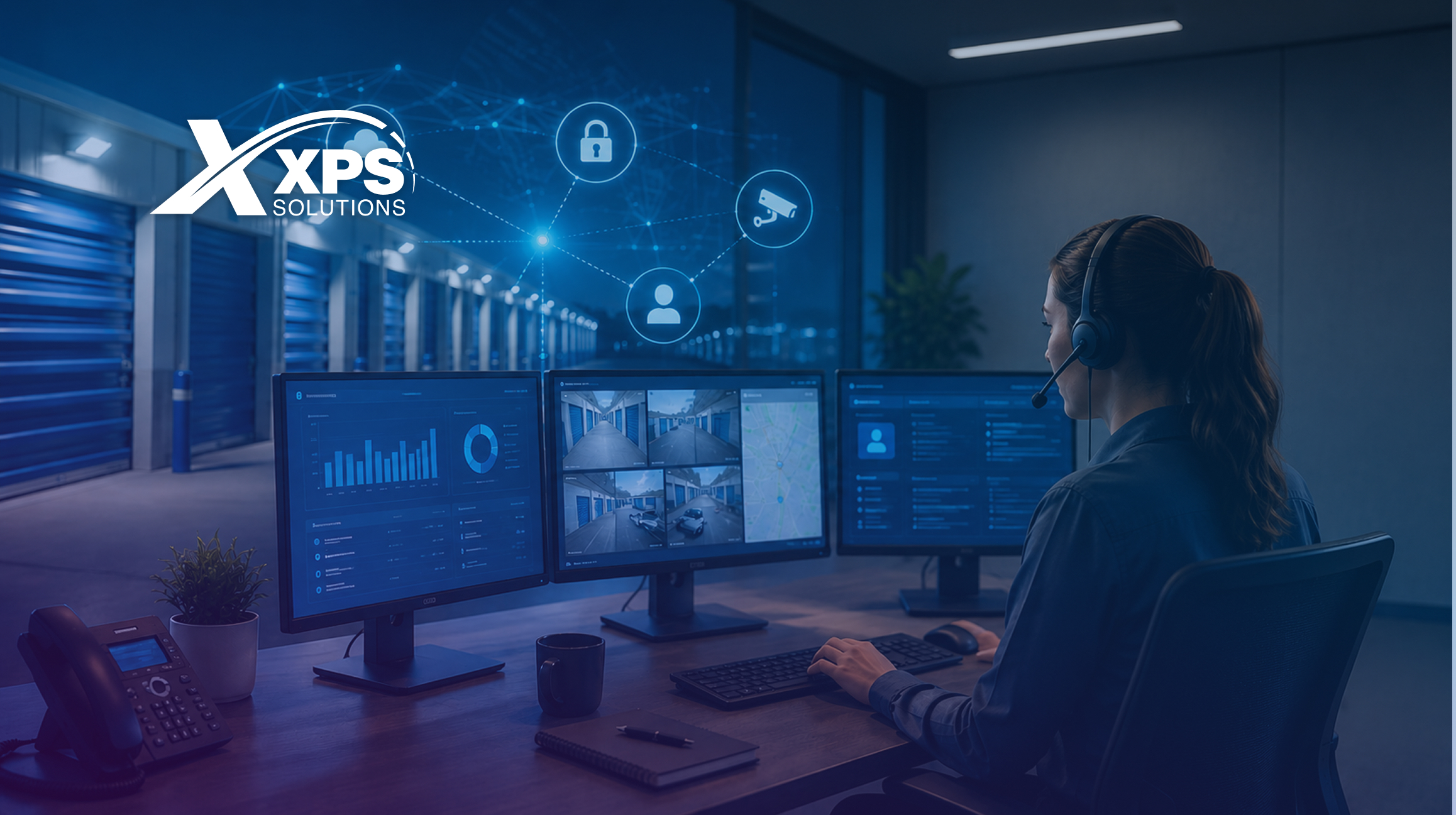
This is why the remote management service model is continuing to evolve. Artificial intelligence is now being layered into remote operations to ensure that tenant inquiries are handled immediately, with accurate, real-time information available without delays or hold times. Remote management, on its own, creates structure, while AI introduces 24/7 call responsiveness.
Understanding how this setup actually functions requires a close look at daily operations. Executing a successful remote strategy means knowing how to balance technology with human touchpoints to drive rentals and protect your net operating income (NOI). This guide explores the mechanics of remote management, common pitfalls, and how artificial intelligence acts as the ultimate performance layer for your facility.
What Is Remote Management in Self-Storage?
Remote management shifts the location of your operational oversight rather than eliminating it entirely. At a foundational level, this strategy allows key facility functions to be handled off-site through centralized systems and dedicated support teams.
When you adopt this framework, you can seamlessly handle several critical tasks without a dedicated desk clerk. These functions include:
- Customer communication and support
- Lead capture and follow-up
- Payment processing and automated billing
- Account management and troubleshooting
Thanks to advancements in cloud platforms, smart facility tools, and automated billing software, operators can now manage daily operations from anywhere. You maintain full visibility and control over your property. This decentralized model gives operators the freedom to scale across multiple locations without relying heavily on a single on-site manager at every property.
How Remote Management Works in Practice
Traditional self-storage operations are built around the person on-site. That manager answers calls, handles rentals, takes payments, and keeps the day moving.
In a remote model, those responsibilities become reassigned. Leasing, tenant communication, and account management are handled by centralized teams, supported by systems that standardize how each interaction is handled across the portfolio. Instead of each location operating slightly differently, the process becomes consistent across sites.
At the same time, the operational backbone shifts into software.
Property management systems track occupancy, payments, and delinquency in real time. Billing, notices, and follow-ups are automated, allowing operators to manage the full tenant lifecycle, from first inquiry to move-out, without relying on manual intervention at the facility level.
On-site activity doesn’t go away, but it becomes purposeful. Maintenance, lock checks, unit walks, and audits are handled by field teams or district managers who visit the property as needed. The facility is no longer staffed to “wait for business.” It is supported by a system designed to handle demand in real time.
From the tenant’s perspective, the experience becomes more direct.
They search, reserve, rent, and pay online. Gate access is issued automatically. Move-ins can happen on their schedule, not yours. The operation is built with the intention of removing friction, not creating it.
That shift, from location-based management to system-based execution, is what makes remote management scalable. It allows operators to grow across multiple facilities without rebuilding the same staffing model at every site, while still maintaining control over how the business runs day to day.
Where Remote Management Alone Can Fall Short
A strong structural model does not automatically guarantee flawless execution. Many operations struggle to maintain high conversion rates when they first transition to remote setups.
The most common breakdowns happen during moments of peak customer demand. A missed phone call, inconsistent pricing information, or a delayed follow-up can severely damage the tenant experience. Self-storage is a high-intent business. Customers frequently make rental decisions within minutes of starting their search. If a prospect reaches your voicemail because your centralized team is busy, they will likely call the competitor down the street.
Without consistent, immediate responsiveness, well-structured remote operations will lose valuable rental opportunities. Dropped leads directly impact occupancy rates and stifle revenue growth.
Managing Escalated Tenant Issues and Delinquency Follow-Up
Remote management also changes how facilities handle escalated tenant situations. While automation can streamline routine communication, certain operational moments still require direct human involvement and consistent follow-through.
Delinquent accounts, payment disputes, tenant complaints, and complex customer concerns cannot simply be automated and ignored. Without a structured escalation process, unresolved issues can quickly impact tenant satisfaction, collections performance, and overall operational stability.
This is where centralized support teams become critical within a remote management framework. Dedicated teams can monitor accounts receivable, follow up on delinquent tenants, coordinate payment resolutions, and manage escalated conversations with consistency across every location.
Artificial intelligence can support this process by quickly identifying issues, routing conversations appropriately, and ensuring that no tenant inquiry goes unanswered. However, long-term operational success still depends on having experienced teams capable of managing sensitive tenant interactions and protecting revenue performance.
How AI Call Assist Strengthens Remote Management
Artificial intelligence has evolved to fix the exact vulnerabilities found in remote operations. AI virtual assistants reinforce your management structure by solving the industry’s biggest challenge: speed and consistency of response.
AI-powered phone systems and chatbots are heavily utilized across the industry to improve operational efficiency. Industry data shows that virtual assistants can handle significant call volumes, resolving over 50% of inbound customer inquiries without human intervention.
AI call assist provides several distinct advantages:
- Answers calls instantly: Prospects never wait on hold or get sent to voicemail.
- Provides accurate information: AI syncs with your facility management software to quote real-time pricing and availability.
- Captures leads 24/7: With over 70% of storage inquiries occurring outside standard office hours, AI secures rentals while you sleep.
- Routes complex conversations: If a tenant has a nuanced billing dispute, the AI transfers the call to a live agent.
This technology creates a highly effective, layered operational model. AI handles immediate responses and routine tasks. Your human teams can then dedicate their energy to higher-value conversations that drive revenue, handle complex tenant retention issues, and build local community relationships.
What This Looks Like in a Modern Operation
When AI call assist supports a remote management framework, the primary result is absolute consistency. Calls get answered instantly. Leads enter your sales pipeline in real time. Communication remains uniform across all your facility locations. Staff focus shifts entirely to high-impact interactions that require true empathy and problem-solving skills.
AI and automation also improve backend operational functions. Algorithms now assist with dynamic pricing, demand forecasting, and customer engagement tracking. These smart integrations demonstrate a measurable impact on performance, helping operators achieve higher NOI. The entire operation revolves around continuous responsiveness instead of relying on limited staff availability.
Is Remote Management Right for Your Facility?
Transitioning away from the traditional front office is an important decision. While highly effective, remote management requires careful evaluation of your specific portfolio.
This model may be a strong fit if you:
- Manage multiple locations and want to streamline your operations.
- Experience frequent staffing shortages or high employee turnover.
- Need to capture rental demand outside standard office hours.
- Want to create more operational consistency to boost your NOI.
Alternatively, you might prefer a hybrid approach if your facility relies heavily on in-person interactions for truck rentals or retail sales. Some properties maintain specific operational needs tied closely to physical presence. Ultimately, the most important question to ask is whether adding remote workflows will strengthen your unique business operations.
The Evolving Landscape of Self-Storage Operations
Managing a self-storage facility involves much more than operating without an office. The industry is experiencing a massive shift toward digital, automated, and data-driven ecosystems. Operators continue moving toward smarter systems that improve efficiency, enhance the tenant experience, and support scalable growth.
The most successful facility owners do not view technology as a complete replacement for human staff. They integrate both elements carefully. By pairing dedicated management teams with powerful AI tools, you can create a highly responsive operation. This combined approach ensures your business remains competitive, cost-effective, and perfectly positioned for long-term success.
If you’re interested in learning more about how artificial intelligence and remote management are transforming self-storage operations, explore XPS AleX AI™ and our Remote Management Services page.
If you’re ready to strengthen operational efficiency, improve tenant responsiveness, and capture more rental opportunities across your portfolio, schedule a conversation with XPS Solutions to build the right remote management strategy for your facilities.
