
Self-Storage Staffing Crisis: How to Keep Operations Running
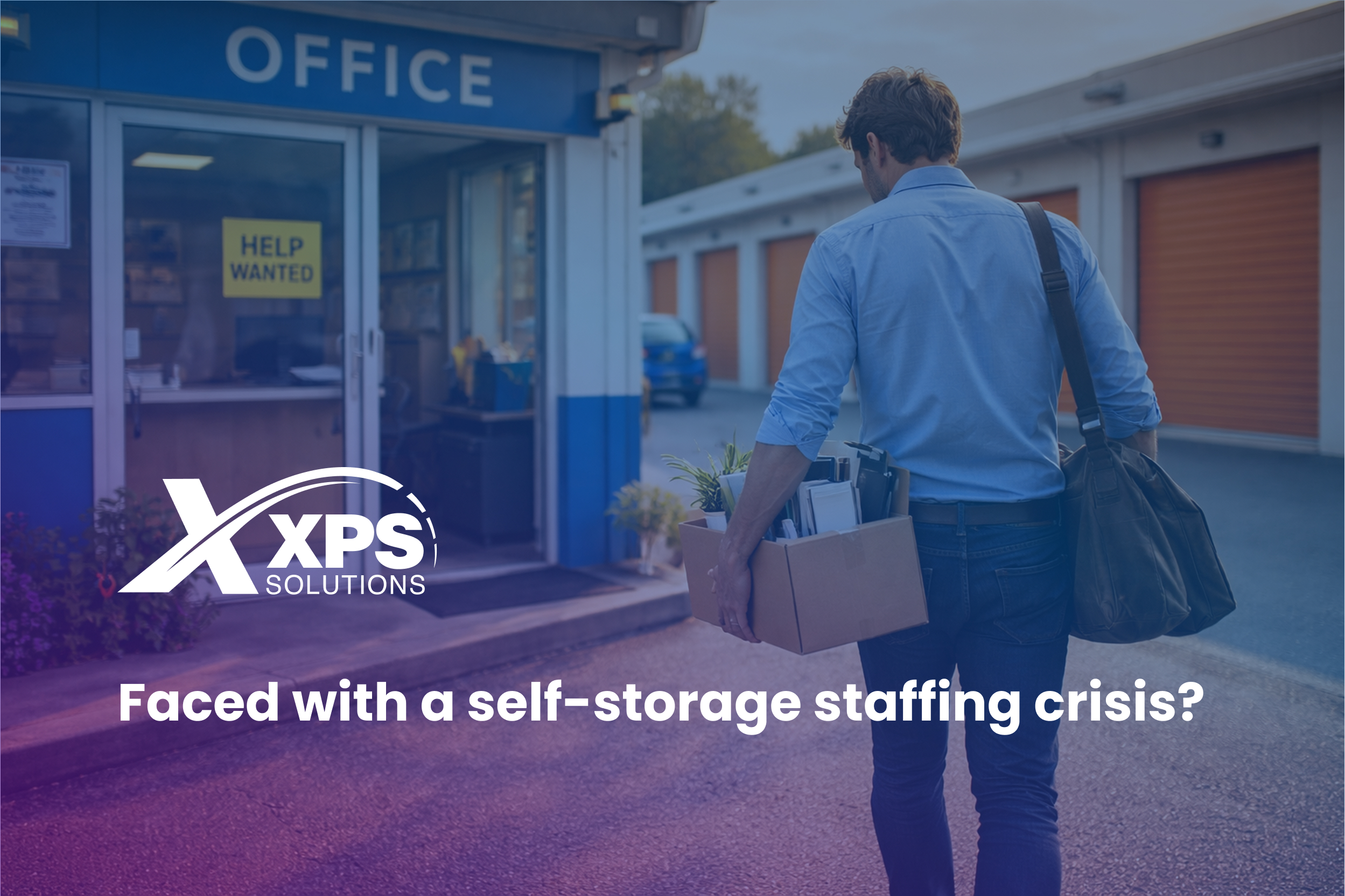
What to Do When Your Faced with a Self-Storage Staffing Crisis?
A sudden manager resignation is one of the most disruptive events a self-storage operator can face. One day, everything is running smoothly. Next, the person responsible for leasing calls, tenant support, rent collection, and daily operations is gone and your faced with a self-storage staffing crisis.
The instinct is to scramble. Post the job listing. Call in favors. Hope nothing falls through the cracks in the meantime.
But here is the harder truth: if your facility cannot function without a single manager in place, the problem predates the resignation. It was already there, waiting.
The operators who handle sudden departures best are not the ones who react fastest. They are the ones who built systems before the crisis arrived.
The best approach for these scenarios is preparation. Take it back to the good old days: stop, drop, and roll. This is one of the first lessons a person learns when facing a hazardous fire scenario. Of course, no one expects someone to become a firefighter when a manager resigns, but the idea still symbolizes a practical approach. Operators who already have a game plan in place before the hazard appears are the ones who build a structure strong enough to prevent these potential fires from spreading.
Why Manager Turnover Is an Operational Constant, Not an Exception
Self-storage facilities have long operated with lean staffing structures. Most rely on a single manager or a small two-person team to cover leasing, customer service, rent collection, marketing, and property oversight. That model is cost-effective. It is also structurally fragile.
According to the Bureau of Labor Statistics Job Openings and Labor Turnover Survey (JOLTS), service-related industries such as retail and hospitality regularly experience annual staff turnover rates of 50 percent or higher, sometimes exceeding 70 percent. As noted by Shannon Charbonneau, Director of Client Relations at XPS Solutions, writing in Inside Self-Storage (March 2026), self-storage roles frequently draw from this same labor pool.
Storage Commander’s own 2026 operator survey reinforces the point. When asked where they faced their greatest challenges in 2025, 24 percent of operators cited staffing shortages or retention issues as their top concern, second only to occupancy pressure. Turnover disrupts customer relationships, erodes institutional knowledge, and drives up the cost of hiring, training, and onboarding from scratch.
Put simply, a manager leaving is not an unlikely scenario. It is a recurring operational reality that every facility owner should plan for.
The Immediate Risks When a Manager Walks Out
When a manager leaves without adequate transition time, four risks appear almost simultaneously.
Missed rental inquiries. Prospective tenants shopping for storage rarely wait. Research cited in the 2026 Small Business Missed Call Revenue Study by PCN Answers found that small and mid-sized businesses miss between 25 and 60 percent of inbound calls depending on staffing levels and time of day. Critically, 78 percent of customers have abandoned a business after an unanswered call, and 85 percent will not attempt a second call after reaching voicemail. In a competitive market, a missed call is rarely a delayed opportunity. It is a lost one.
Degraded tenant support. Existing tenants still need answers about gate access, billing, unit availability, and account changes. Without someone actively managing these requests, small issues escalate quickly into poor reviews and move-outs.
Revenue collection gaps. Rent collection does not pause when a manager leaves. Without proper coverage, payment reminders, delinquency follow-ups, and processing can fall behind, directly affecting cash flow and NOI.
Operational blind spots. Owners temporarily lose visibility into daily activity: inquiries, reservations, and move-ins. In a data-driven market, that visibility gap can cost occupancy ground that takes months to recover.
The financial stakes are measurable. According to SkilCheck Services, each missed rental call represents potential revenue of approximately $1,056 when calculated against the average unit price and average length of stay in the U.S. market. At even a modest missed-call rate during a staffing gap, the cumulative revenue exposure compounds quickly.
The Systems That Keep a Facility Running
The good news is that well-structured facilities can maintain continuity through a staffing transition without sacrificing the tenant experience. The key is having layered operational infrastructure already in place before a vacancy occurs.
Professional Call Coverage
Incoming rental calls are the most time-sensitive revenue channel a facility manages. When onsite staff is unavailable, professional virtual call support ensures that inquiries are answered, leads are captured, and prospective tenants receive the information they need to move forward.
One Texas operator documented by XPS Solutions improved call-response times by 63 percent and rental conversions by 22 percent after deploying virtual call support, while also saving more than $60,000 annually in labor costs. That kind of result is not coincidental. It reflects what happens when a facility stops relying entirely on a single person to manage inbound volume.
AI-Assisted and Live Chat Support
Prospective tenants increasingly expect instant answers. Research cited by XPS Solutions found that website visitors who engage with live chat are 2.8 times more likely to become renters than those who do not. AI-assisted chat tools can handle common inquiries about availability, pricing, gate access, and lease terms around the clock, ensuring that prospective tenants receive responsive engagement even during a staffing gap.
Automated Payment Systems
Automated billing platforms ensure rent collection continues uninterrupted, regardless of who manages the office. Tenants can make payments through online portals, mobile apps, or automated phone systems without requiring staff involvement. This protects cash flow and keeps collections consistent throughout any transition period.
Mobile-Enabled Tenant Self-Service
According to StoragePug’s October 2023 analysis of SSA Demand Study data, approximately 41 percent of self-storage customers find storage via the internet, and 63 percent of all shopping journeys begin online. Tenants increasingly expect to manage their accounts digitally. Mobile-enabled platforms allow tenants to make payments, update account details, sign digital leases, and manage reservations without visiting the office or waiting for a staff member to assist them.
Temporary Remote Management Support
Some operators deploy remote management services to bridge operational gaps during a staffing transition. Remote support teams can handle tenant inquiries, monitor daily activity, manage reservations, and coordinate with ownership, providing a functional management layer while recruitment is underway.
Building a Hybrid Operational Model Before You Need It
The most resilient self-storage operations do not wait for a staffing crisis to expose their vulnerabilities. They build hybrid operational structures that distribute responsibility across people, technology, and remote support.
As Charbonneau described in her March 2026 Inside Self-Storage article, this model typically works as follows:
- On-site staff focus on tenant relationship building, property maintenance, local marketing, and physical onboarding.
- Virtual teams handle phone calls, after-hours communications, and leasing support when onsite staff are unavailable.
- Automated tools manage payment processing, lease renewals, reminders, and access control.
This layered structure means that when one element is disrupted, the others continue operating. A manager’s departure does not trigger a total operational breakdown. It simply shifts more weight onto systems that were already carrying part of the load.
Storage Commander’s 2026 industry report echoes this direction. Operators who maintained occupancy through a difficult 2025 market were those who combined technology investment with consistent local execution, tracking performance closely and adjusting quickly rather than waiting for problems to compound.
What to Do in the First 72 Hours
When a resignation occurs, a structured immediate response limits the damage.
- Activate call coverage immediately. If you have a virtual call support service, notify them of the transition. If you do not, this is the moment to prioritize it. Missed rental calls during the first days of a vacancy are revenue that will not return.
- Verify automated payment systems are functioning. Confirm that tenant billing, payment reminders, and delinquency notices are running correctly without manual intervention.
- Communicate proactively with tenants. A brief, professional notice advising tenants of a staffing change and providing alternative contact methods (phone, online portal, email) prevents frustration and demonstrates operational stability.
- Audit pending tasks. Identify any open leases, pending move-ins, or unresolved tenant issues requiring immediate attention, and route them to the appropriate coverage.
- Begin structured recruitment, not reactive hiring. The pressure to fill a vacancy quickly often leads to poor hiring decisions. Use the operational buffer created by your support systems to recruit thoughtfully rather than urgently.
The Broader Lesson
A sudden manager resignation is a stress test. Facilities that pass it are not simply lucky. They have made deliberate decisions about infrastructure, automation, and support systems that reduce their dependence on any single individual.
The self-storage market in 2026 offers more operational tools than at any previous point in the industry’s history. Virtual call support, AI-driven communication, mobile tenant management, automated billing, and remote oversight have all become accessible, scalable, and affordable. The operators using these tools are not just better positioned for a staffing crisis. They are more competitive every day.
Staffing volatility is a structural feature of service industries, not an anomaly. The facilities built to absorb it are the ones that will continue growing through it.
If the systems are not yet in place, now is the time to build them. Because the next resignation will not send a warning.
Sources
(Used for credibility and research reference)
- Inside Self Storage – Staffing turnover and workforce challenges in self storage
https://www.insideselfstorage.com/staffing/surpass-your-self-storage-staffing-shortages-strategies-to-help-you-create-a-scalable-resilient-workforce - Inside Self Storage – Why self storage staff turnover happens
https://www.insideselfstorage.com/staffing/please-don-t-go-why-self-storage-staff-turnover-happens-and-how-to-prevent-it - Storage Commander – Self storage industry challenges and staffing issues
https://www.storagecommander.com/blog/self-storage-business-trends - Bureau of Labor Statistics (referenced within industry articles) – service industry turnover rates
